
School is back in session, mornings are once again chilly and the excitement for the season opener is as palpable as static electricity. This moment is what we have all been long awaiting through the heat, humidity and long days of summer. Are you ready though? Have you scouted, set up your gear and know how to maximize your days in the field for doves and geese? Read along in this month’s installment of Syren Savvy for incredible tips, tricks and tried-and-true tactics to bag more birds.
Staying the Course
Now that the season is officially underway, it’s a little too late to really get in those reps at the clays course. That doesn’t mean you can’t perfect a few things to ensure you are ready to go. The game of sporting clays was created specifically to allow hunters to tune up for their chosen quarries. Just about every course will offer several presentations that are indicative of doves and geese.
For doves, look for high-crossing shots, shots starting from behind the shooter and traveling out towards the center or sides of the field, and shots starting from the far outsides of the field and landing towards the center. All these mimic doves trying to get to feed or roost.
For geese, you want to find presentations that throw a bird from the edges from a high point and curl into the field closer to the shooter, mimicking a goose cupped up and trying to land for feeding. Crossing shots are always great as those will mimic when the flock is trying to get back off the field and find cover and safety away from the volley of gunfire.
Even minimal time on the course will allow you to try out a new gun, new gear and work out any kinks with this equipment. It gives a shooter a quiet and unpressured space in which to work because once you’re at the hunt, the adrenaline kicks in and all your actions behind the barrel need to be instant, clean and concise.
Got Gear?
One thing I hate to see is a hesitancy by a hunter to shoot from a seated position. This motion is so much easier than what people realize. If they would just try it a few times at the clays course, they would realize how many more birds they can add to the bag since staying seated keeps the birds coming in and prevents some of the flaring.
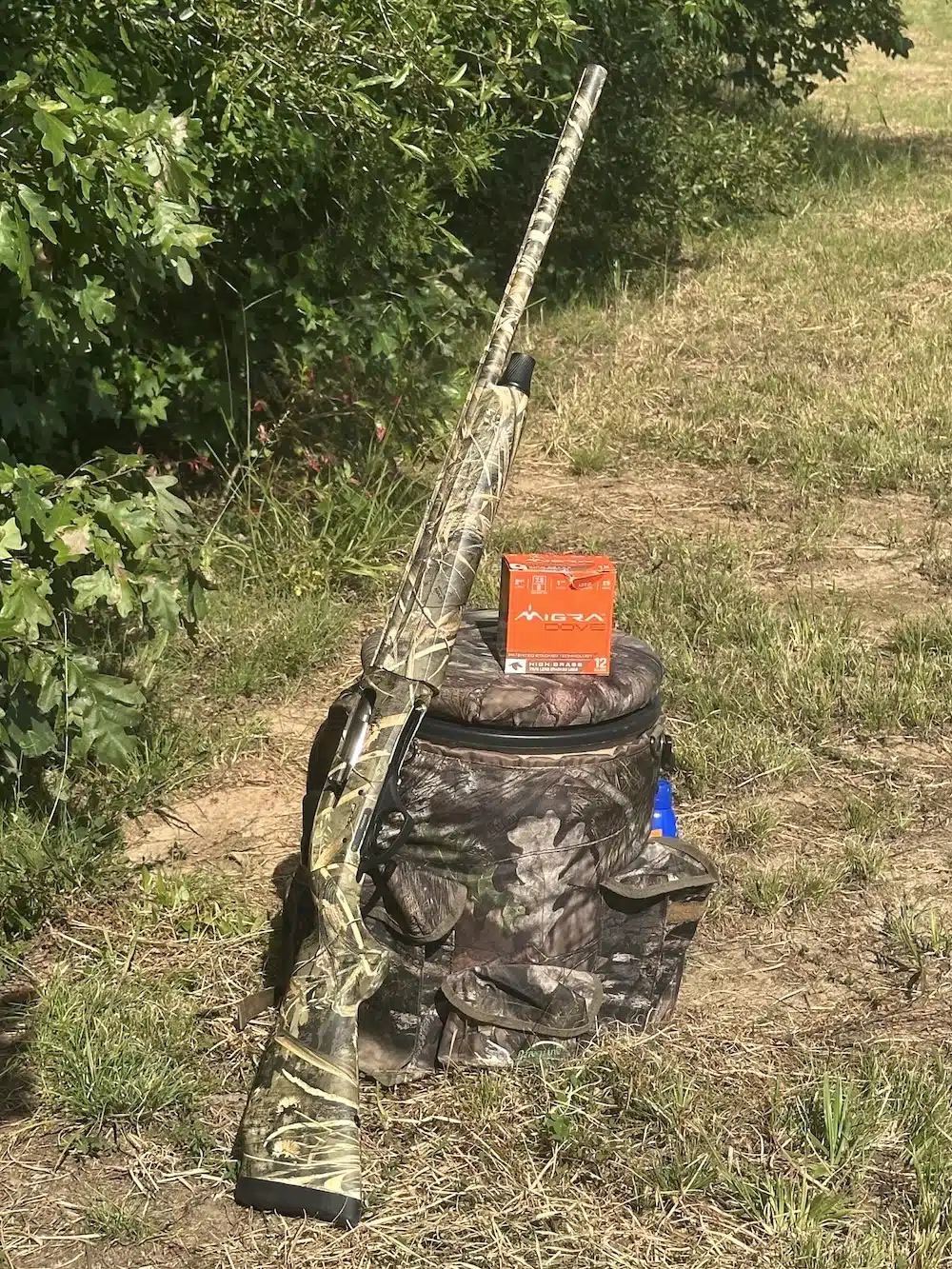
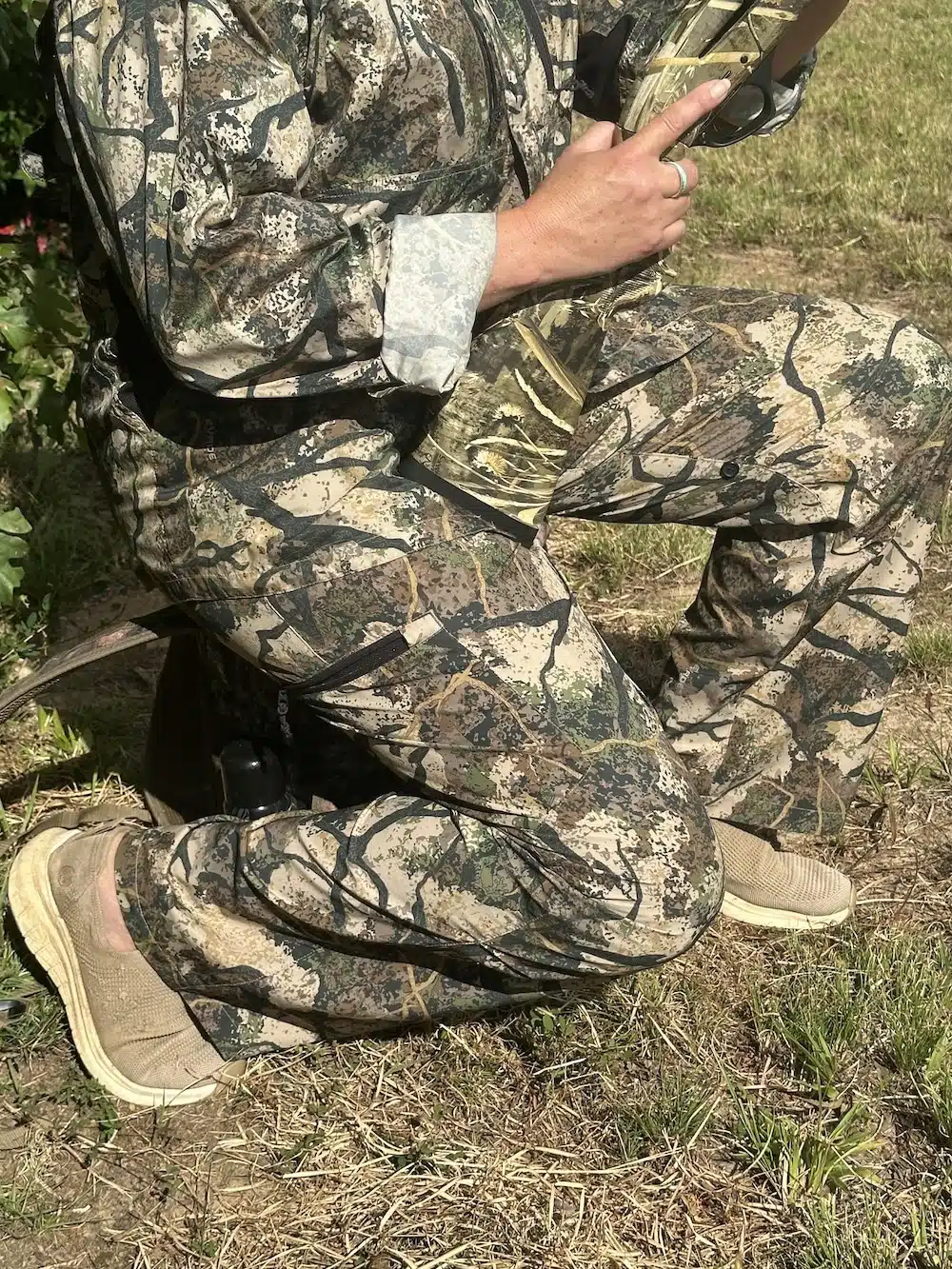
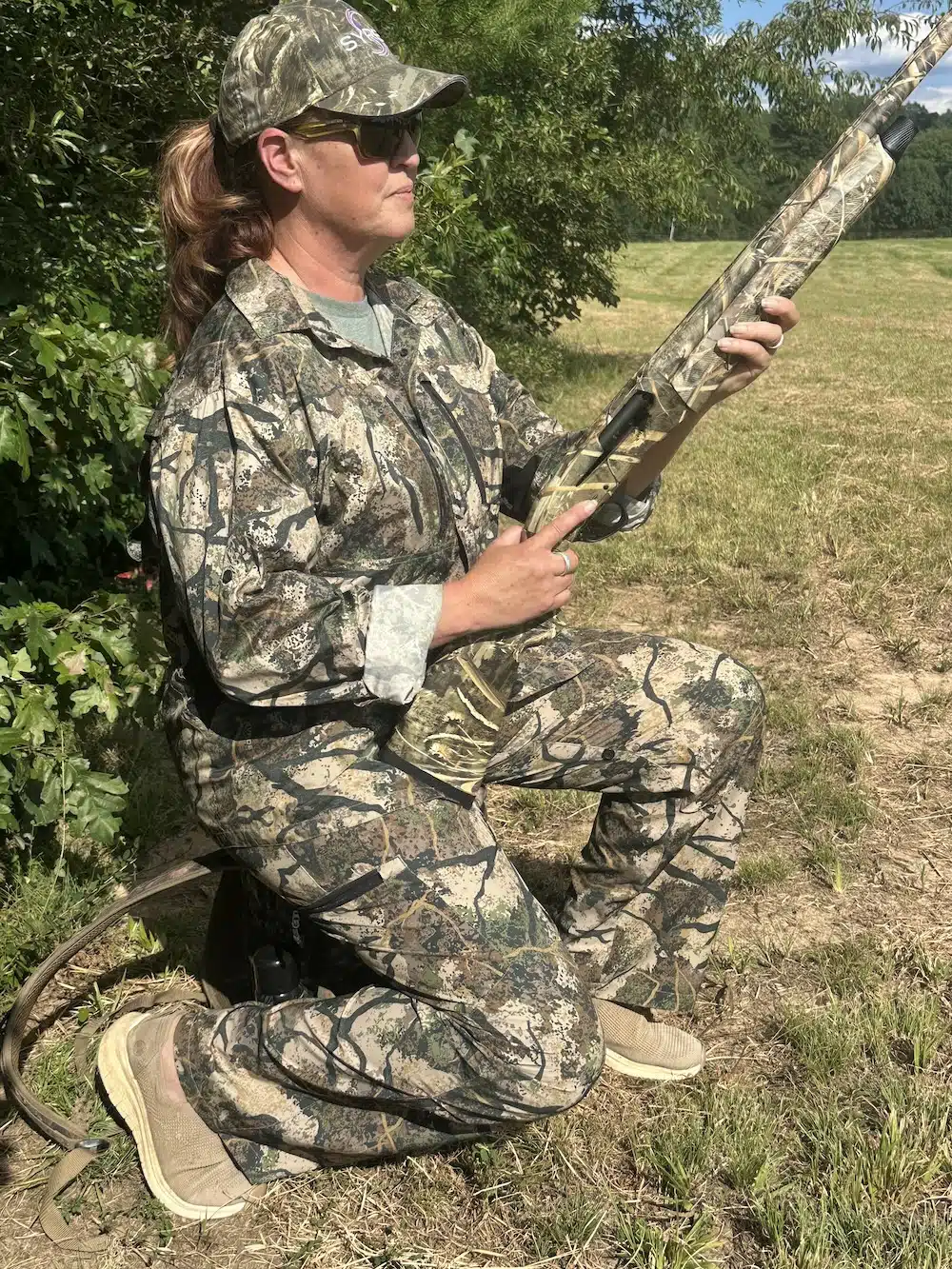
A dove stool or seat is typically a small, tripod setup that folds down for portability, is in dark, natural coloring such as camo and is a lifesaver for those long, quiet moments in the field. The traditional dove bucket is literally a 5-gallon bucket with a swivel seat attached and insulation inside to keep your birds cool during the hunt. When you shoot from being seated, make certain that you bring your dominant leg just behind you. For instance, I’m a right eye/right hand shooter so my right leg stays softly tucked up behind me.
This positioning allows me to swivel smoothly and quickly as birds move across the field, provides better balance for my seat, much better alignment into my gun and when needed, since my core muscles at 51 years are nowhere near what they used to be, I’m able to smoothly transition up into a standing position without losing my track on a bird.
Goose Hunting
Early goose season is all about the feeding spots. Geese are getting fattened up for the upcoming colder months and migration patterns. September goose season is held on open, cut crop fields where the flock can find ample grain and vegetation. This means layout blinds. Again, you will want to maximize your positioning to better allow your body ease of movement while maintaining a visual connection on the bird and proper alignment with your shotgun.
Instead of lying there with your feet to the landing zone, turn your layout at a slight angle with your feet pointed just off to the side of the landing zone. Again, since I’m a right-side shooter, my layout will be positioned with the left side of my body angled to the landing zone. This is much easier for me to push off my side and elbow and gives my upper torso greater rotation as birds come in and out of the field. Popping up and having my feet pointed straight to the landing zone limits my left and right rotation, not to mention, this position puts greater strain on my core to smoothly rise up.
Practicing in a layout at your local club probably isn’t going to be allowed, but you don’t actually need live fire for great practice. Set up at home and get very comfy with popping up, shotgun in hand. Always make absolutely certain your gun is unloaded and on safe when performing these exercises outside of the shooter’s box.
Dress for Success
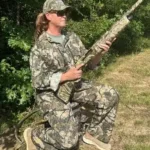
Now, what to wear to this long-awaited shin dig? It’s going to be about the same for both hunts. The drabber and more boring you look, the more action and excitement you’ll have in the hunt. I have super lightweight, breathable camo I wear over my shorts and a t-shirt since Virginia can easily be in the upper 80s, or worse, to start the season.
Decide if you want to use a vest or hip bags for doves. I suggest hip bags since, again, it’s usually hot and, there’s less to get your buttstock caught up in with a more “slicked down” set up. If you use a vest, it must be boring. No orange, no red, no other colors than browns or greens. If you shoot right-handed, keep your ammo on the right side; if you’re a leftie with a left-hand shotgun, keep your ammo on your left. Your dominant hand is in charge of all manipulations on the gun, and the off-side hand is just a rudder to steer your muzzle.
The Sunnies and Decoys
Chances are the sun is going to be out and overhead during your hunt, especially with doves. Leave those fabulous, mirrored Costas in the truck and don a pair of matte, polarized lenses. The reflection on your sunglasses will flare the birds. It doesn’t make any sense to conceal yourself with such perfection and then look into the sky with two giant mirrors on your face that could signal in aircraft.
This brings us to decoys. Birds of a feather flock together is the best advice you can follow. For doves, a battery operated, winged MOJO is a premium signal to other birds in the area, but a few strategically clipped dove decoys can certainly grab attention.
Geese in the early season are more concerned with feeding with their families – since we’re hunting the resident population. Smaller decoy spreads and softer calling will align closer with their expectations and natural settings. Over calling out of desperation never leads to birds on the ground; it just frustrates the caller and all of the other hunters.
Pick a Spot, but not just ANY spot!
Doves are not chickens. They are built for aerial acrobatics. Where they lack finesse is on the ground. Doves have very weak legs, and they are not able to scratch the ground like our favorite barnyard flocks.
When researching a suitable hunt location for doves, find one that offers a feed source and very bare ground. The more dirt, the better. If the ground below the crops looks like a soccer field, don’t bother. You will have a few birds come in but it will be slow and painful. In order of preference: wheat, sunflowers, small grains, melons and corn.
Corn is a natural thermal for animals. It is how the old timers would get their livestock through a tough winter. Corn raises the internal temps in animals and people and since we are hunting in some pretty warm weather, you can see why corn isn’t as high on the menu for the birds when there are better options. No matter what crop you’re hunting over, be sure it has been cut into strips and there is bare ground.
Doves could care less if there is water nearby. This is a farce and not sure why it keeps getting pushed. Power lines though are a huge bonus, especially if they run along or through the field. A thick wood line along the field makes for excellent concealment for the hunters. My favorite property to dove hunt sets out numerous round bales for the hunters to cuddle up against for concealment.
Geese are the lawnmowers of the avian world. They love young shoots and dropped grains. If you can find a cut wheat or corn field with a little bit of fresh growth, you just found gold. When scouting for geese, pop on your favorite podcast or Pandora channel and drive around. During the middle of the day, the flocks are loafing in the fields and on farm ponds. Drop a pin, get permission and be ready to come back at zero-dark-30 the next morning to set up.
What’s Your Go-To Gauge?
This spring, I added the Syren Waterfowler to my options. I wanted a performance machine for repetitious hunt shots and one that wouldn’t mind getting dirty. I’m in love with this shotgun!
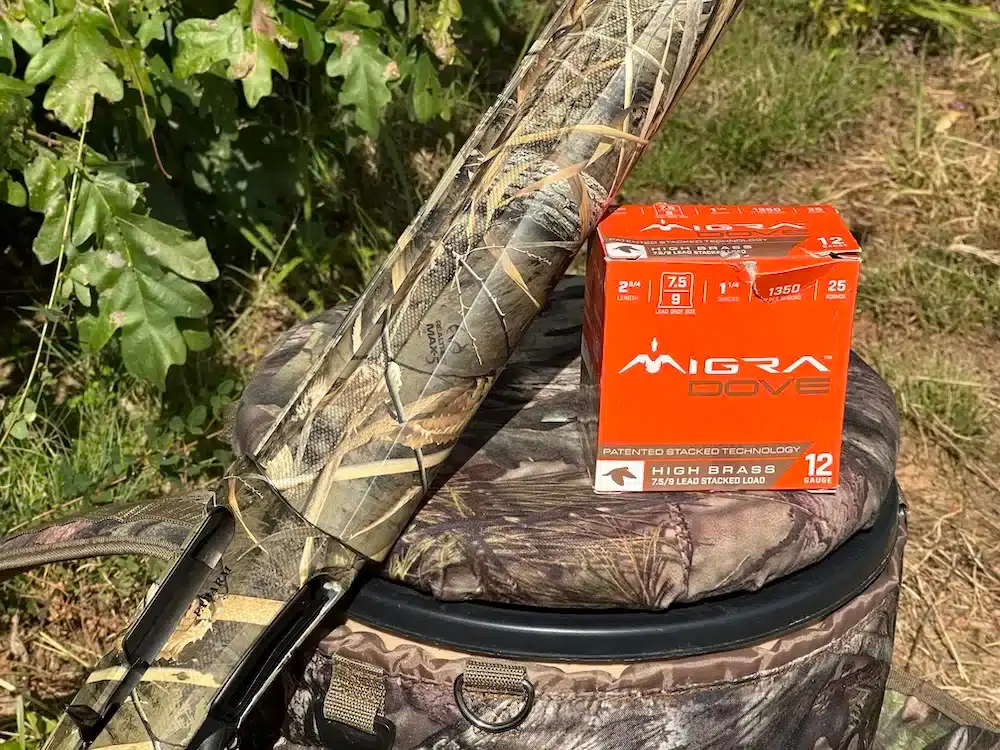
With the soft touch camo pattern, smooth operating Pulse piston system and super smooth swing, this autoloader is a beast on clays, doves, duck, goose, upland birds and even rabbits and more. The Waterfowler is a 12 gauge and comes with a great selection of chokes. Utilizing the larger gauge allows a hunter to throw more BBs into the air for greater pattern density. This alone can help a hunter’s confidence and assist more lethality. A 20 gauge can certainly handle the task at hand; it comes down to the hunter’s preference and the species they are chasing.
For dove and waterfowl, I will always grab an autoloader. The rapid loading and minimal movement in this action keeps birds from flaring, not to mention that third shell is nice to have when the skies light up with birds.
The shot load pushed through the muzzle, combined with a thoughtfully selected choke, will make the difference on the number of birds you put into the freezer. For me, I’m going with the new stacked loads from Migra ammunition. The pattern is tremendous and the loads are available in varying weights. They’re 1-1/4 ounce, #7.5 at 1350fps will prove deadly on doves as well as on my birds in field trials and upland hunting. No matter what load you select, be sure to pattern it at 20 and 40 yards, with a variety of chokes. Most of the time, you will want to use more open chokes, such as skeet and improved cylinder. As the birds become more educated the longer the season goes, you may need to “choke up” to a modified. Always pattern and always know where you are lethal on birds to be able to drop them quickly and humanely.
Here’s to the season opener! All of us at Syren USA wish you the best of luck on birds, great times with friends and family and freezers full of your hard work.
Enjoying this post? Read more just like it on our Syren Savvy Blog HERE.
*This article was originally posted in our column on WomensOutdoorNews.com written by Kate Ahnstrom and edited by WON Publisher/Editors.


 Sign up to get interesting updates and news sent to your inbox.