
You step up in the shooter’s box, feeling pretty confident as you’ve been crushing it around the course. Then, you ask for a demo and your heart sinks. What in the … yeah, the trap setter started feeling frisky halfway through the course and stuck in a few oddities. Chandelles, rabbits, rabbues and other types of presentations aren’t difficult – they’re just different. This month we break down how to break these weird birds and bunnies and give you the tools for success behind the barrel.
What Makes That Target So Different?
Perhaps you’ve settled into a bit of a routine at your local clay course. You enjoy basically the same presentations at each station, every month and watch your score increase with each session. And then it happens. You’re invited to shoot with friends at a different course, and this course has someone that seriously understands how to throw technical presentations. They toss out true pairs of teal presentations that cross over each other. There appear seemingly soft, floating birds staring you in the face that you just can’t hit, a rabbit racing downhill and ugh, multiple chandelles!
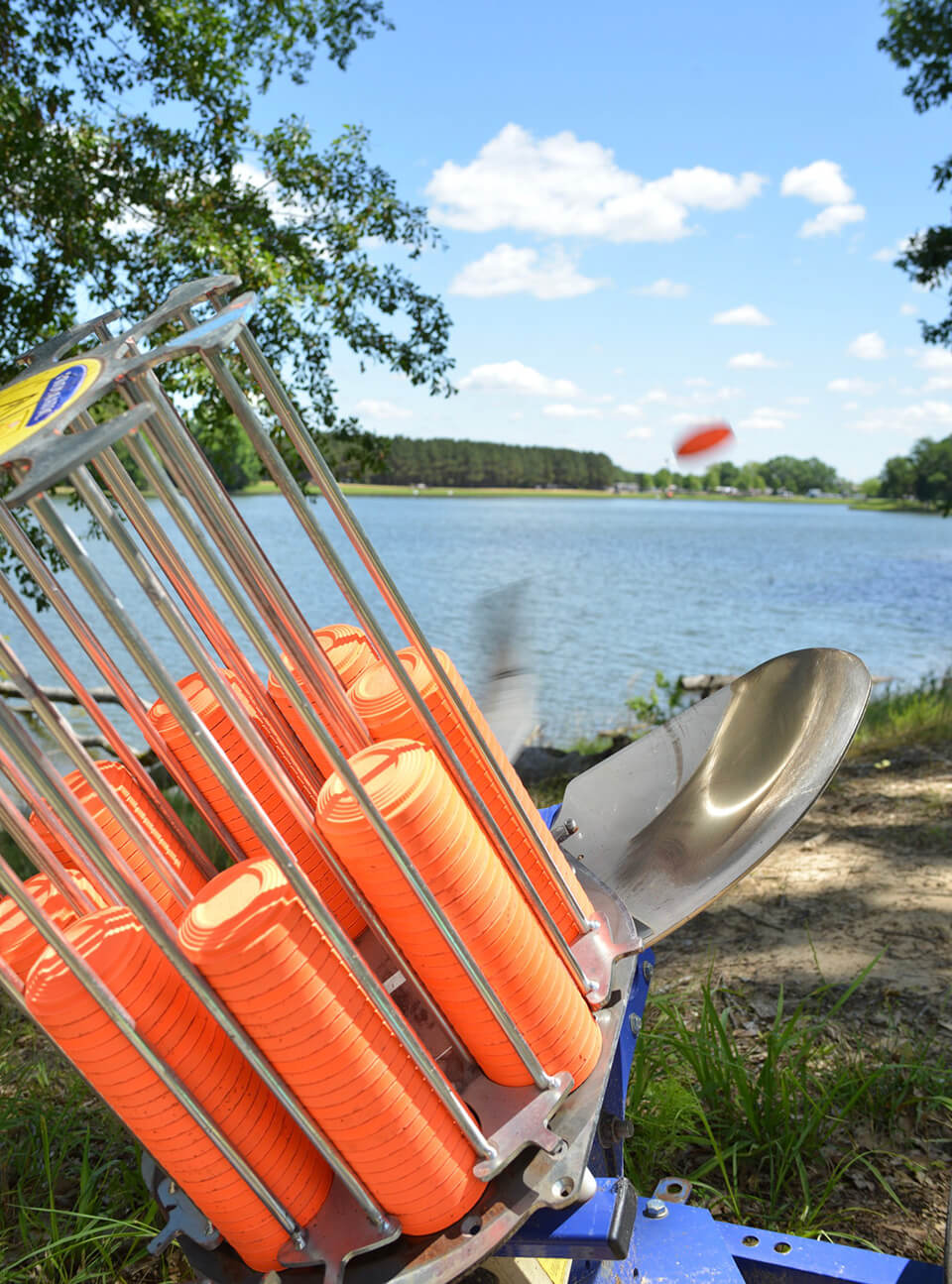
What in fresh clay hell is going on at this course? Simple, it’s a more technical course that is utilizing the background and topography, coupled with a trap setter, that creates a twisted idea of fun. This is exactly why I always encourage students to stretch out beyond their home courses and explore other options. It makes for fun little road trips and introduces shooters to more presentations, expanding their shot inventories.
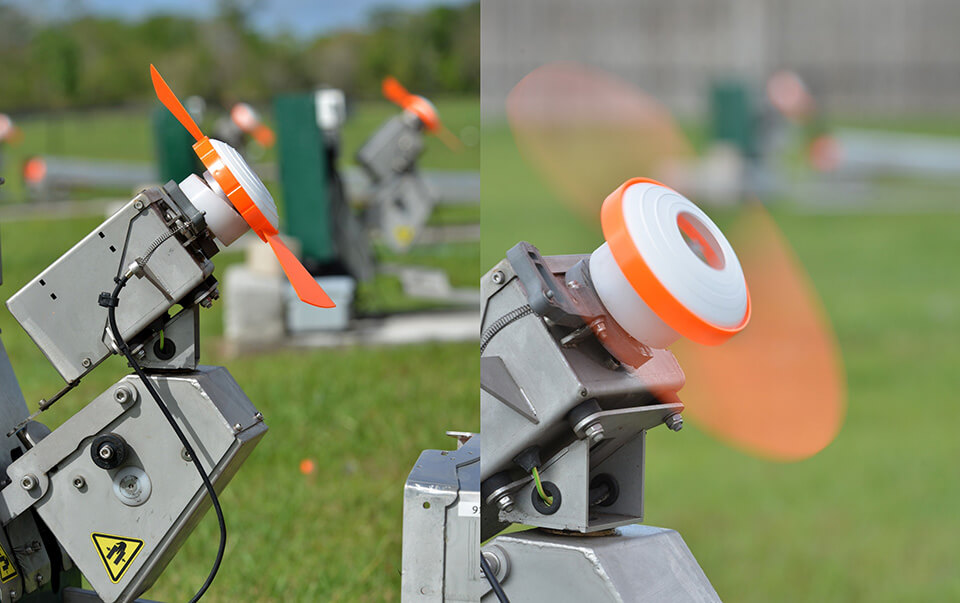
Talk about tricky targets – Helice simulates the random flight path of wild birds and is particularly challenging.
Don’t get me wrong, there are good setters and there are those that just rely on speed and lack of visibility. The latter type of setter has very little understanding of the dynamics involved to set an honest target. They just think it’s fun to trip up the shooter. To all the target setters out there, remember that novice shooters make up the majority of your clientele, so the sweet spot is to have them able to break 40-to-60-percent of targets. Scorecards with less than that average don’t instill confidence and rarely encourage a shooter to return. For those intermediate to advanced shooters, they need to stay engaged as well. Target setting is truly an art. Let’s take a look at some of the presentations these setters use as their “mediums.”
Chandelles
Chandelles – otherwise referred to as the parabolic curve that makes so many cringe. Remember what I said? These odd presentations aren’t difficult, they’re just different. The chandelle is the more commonly seen target in our list of oddities. This is where being able to shoot multiple types of methods will make the biggest difference in your confidence and your score.
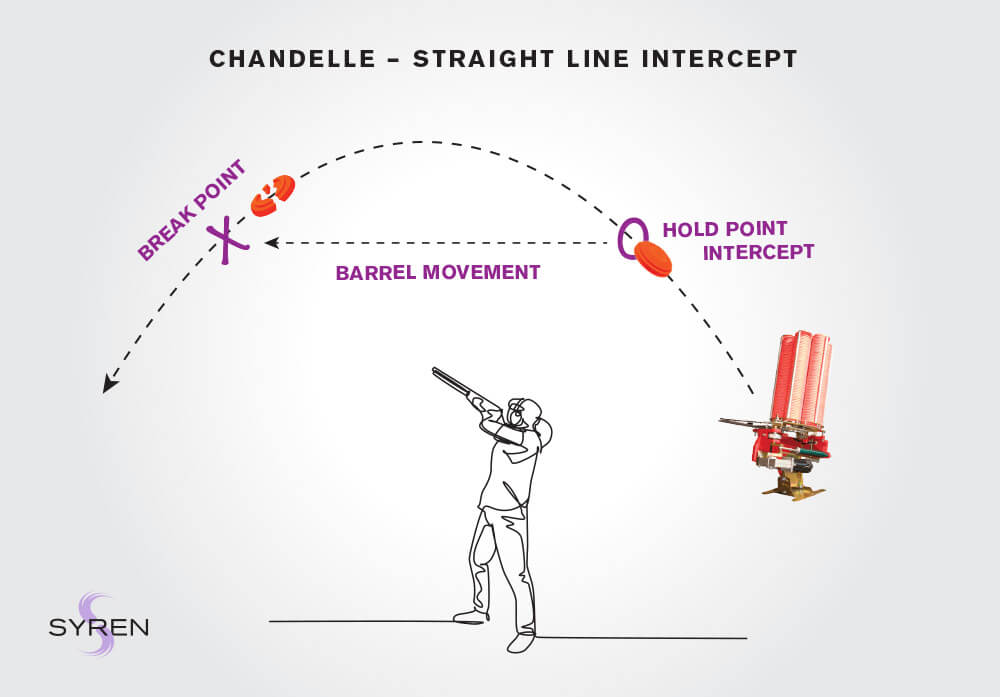
A straight-line intercept is the top choice for chasing chandelles. In a game where linear movements help a shooter master a muzzle and keep the swing on the flight line, it only makes sense to get rid of the extra, loopy movements created by trying to track the target through the roll in the top of its flight.
In your setup, select the break point (where you want to pull the trigger and break the bird) noting the speed (fast or slow) and angle (rising or falling). The bird doesn’t care where you shoot it – but, you care if you can break it – so select a break point that makes you the most comfortable. Find a hold point (the point to place your muzzle in the bird’s way and call “Pull”) where you can see the bird and it won’t outrun the muzzle. Once you call “Pull,” the bird should come to the barrel at the hold point. This is where you will travel with the bird but under the flight line so that you will be able to push in a straight line to the other side of the parabolic curve and intercept the bird at the break point. Envision a quarterback tossing a pass. The ball is tossed into the air, and the running back is zipping under the flying ball to hopefully intercept it in its flight and catch it. You’re trying to do the same thing with your muzzle, pulling the shotgun in a straight line under the target’s flight path to intercept the target at the break point.
Rabbits and Rabbues
You either love or hate a rabbit target. There seems to be no in-between on these hippity-hoppity hair pullers. And it’s for that exact, bouncy reason people tend to shy away from them, or at least rush through the station, so they can just move on to the next presentations.
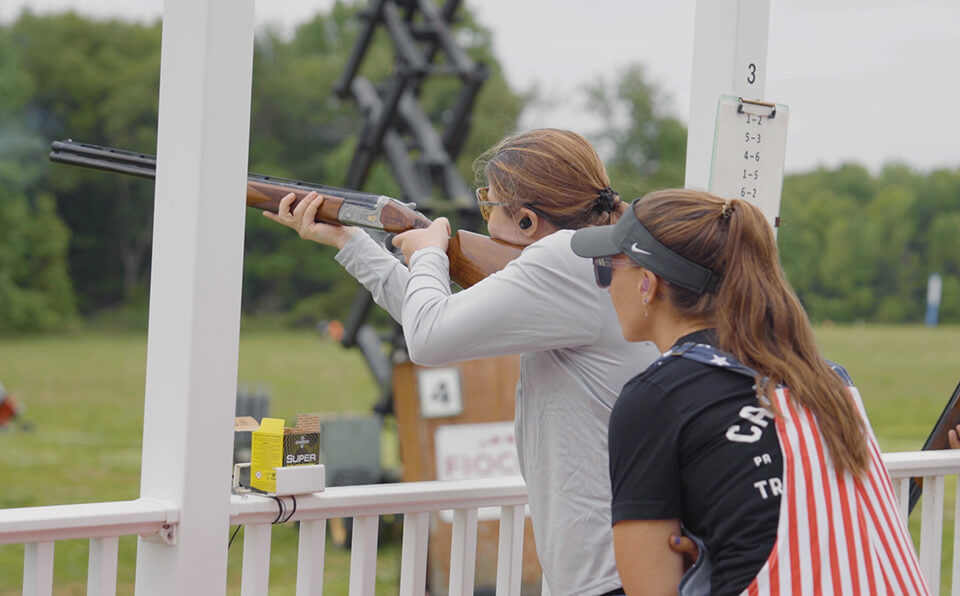
People aren’t thinking about rabbits in terms of geometry and pre-shot plan. It’s one presentation that makes them “spray and pray,” but it’s no different than any other clay; it needs a thoughtful plan. This is also a perfect time to be behind the barrel of an over/under like the Syren N2 Elevate or a Syren Tempio Sporting. Dual barrels allow a shooter to utilize a tighter choke on the rabbit, a denser target requiring a little bigger punch and still have a more open choke for that softer target in the pair.
As with most presentations, the bird needs to be on the barrel. Since rabbits run along the ground, no one wants to set the gun’s barrel that low, so they usually miss high. Geometry still applies here – just the same as the “in-the-air” presentations. If you are starting your muzzle high above the bird at the hold point, you’re starting with a mistake and it’s going to be super tough to break the bunny, especially consistently.

The rabbit also has a naughty secret. You can rifle shoot rabbits. Yes, I just told you to catch the rabbit with 2 eyes, then as soon as you see it, shut down your off-side eye and put the barrel on the bunny’s “nose.” Remember, the muzzle has to be under control – not flailing across the field. The rabbit is nowhere near as fast as you think it is. The stationary background gives the illusion the rabbit is running fast.
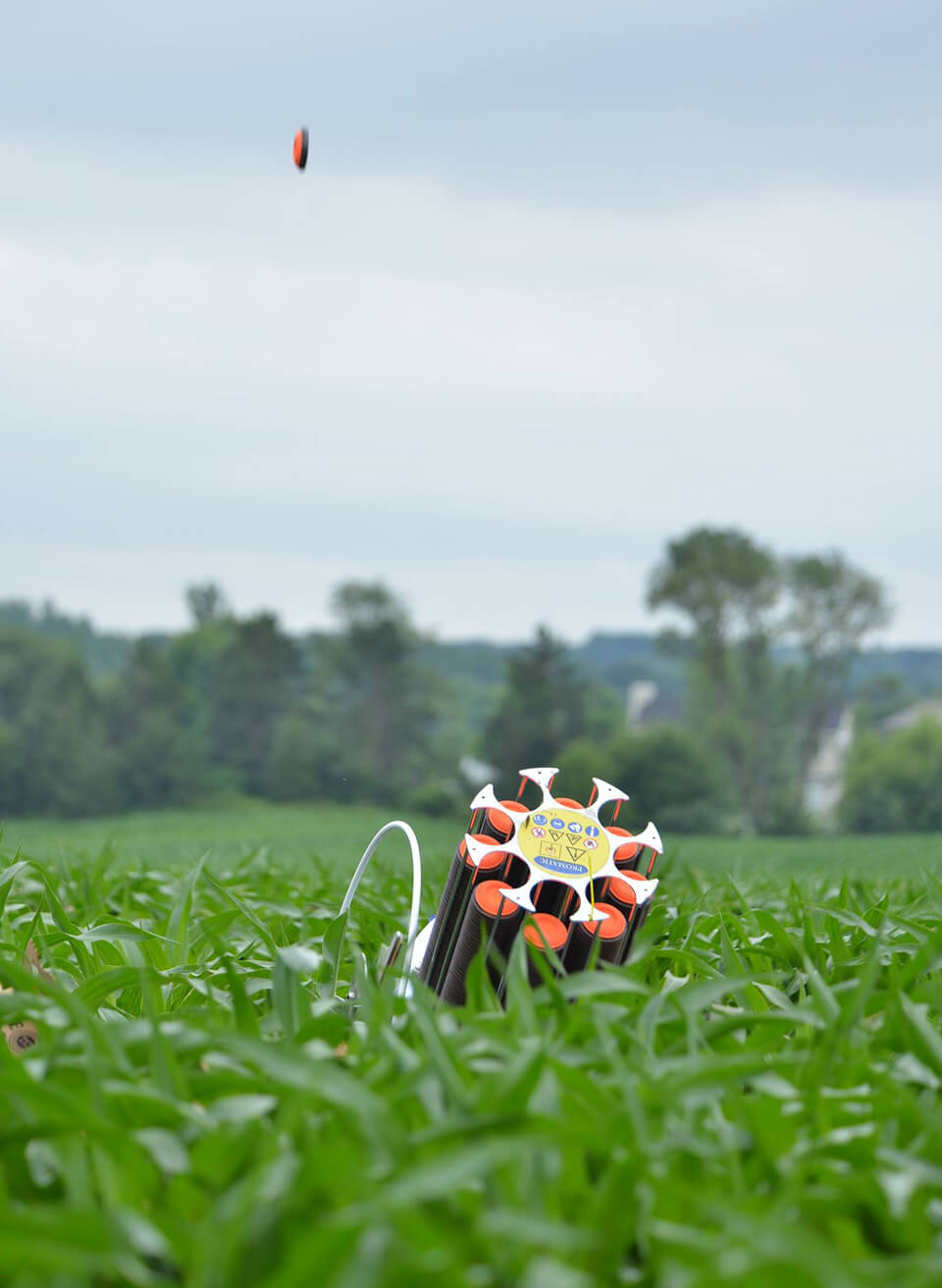
Rabbues are a rabbit target on steroids. As if clay presentations aren’t tricky enough, someone went and invented a machine that can throw a rabbit clay as a crossing bird with a pretty mean angle. The heftier rabbit target means you’re going to need more power from your shot string. All the usual rules of engagement still apply; you just need to be prepared for one wicked-looking clay. Because it’s denser, it’s heavier, so it’s going to fall faster. Again, it’s not difficult, it’s just different!
Devil is in the Details
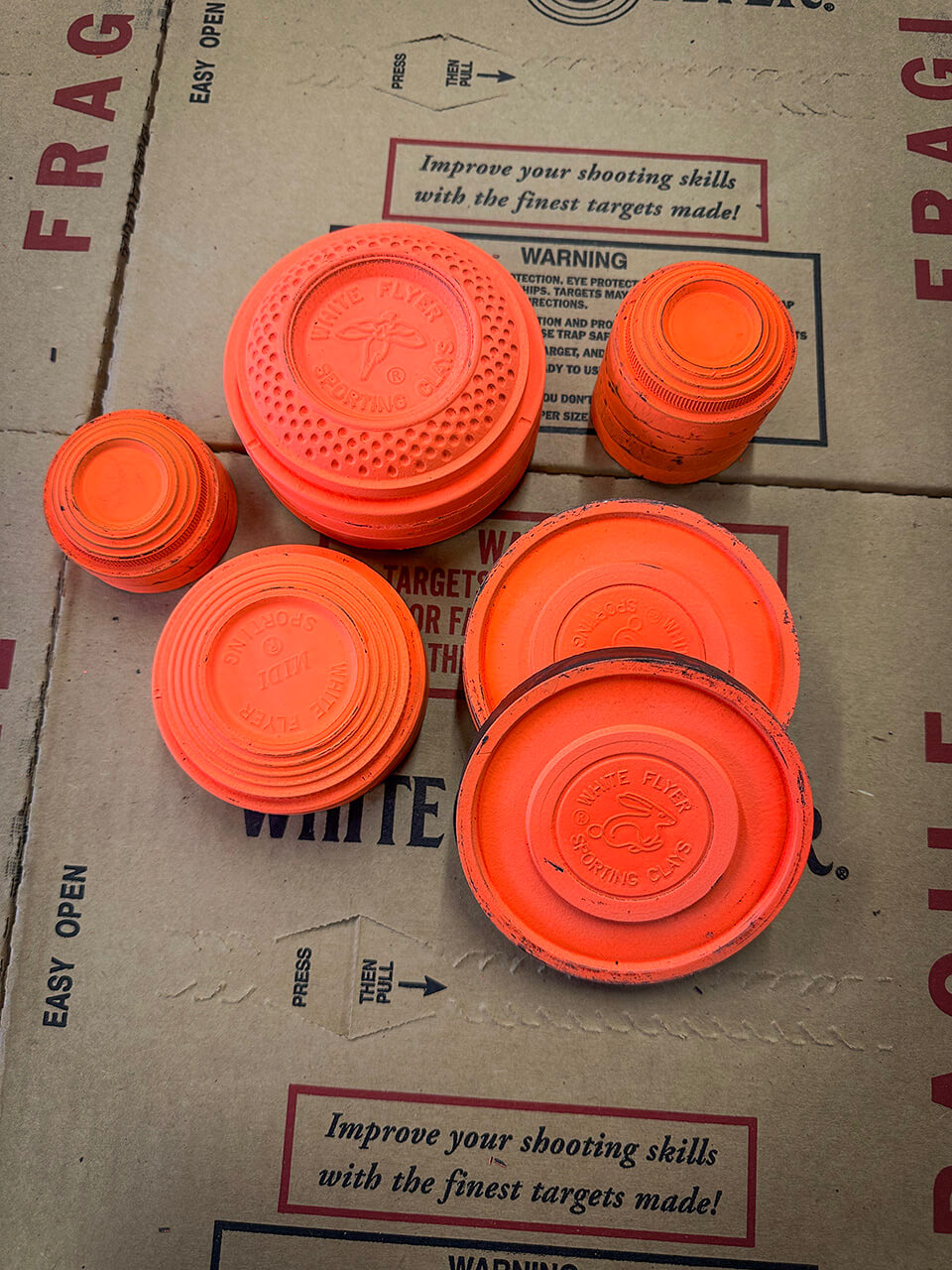
Another favorite trick for target setters is to use a midi- or a mini-size clay. This smaller target will give the illusion that the clay is traveling faster than the standard 108mm target. It’s not, it’s just smaller so the visual speed is more difficult for your eye to pick up.
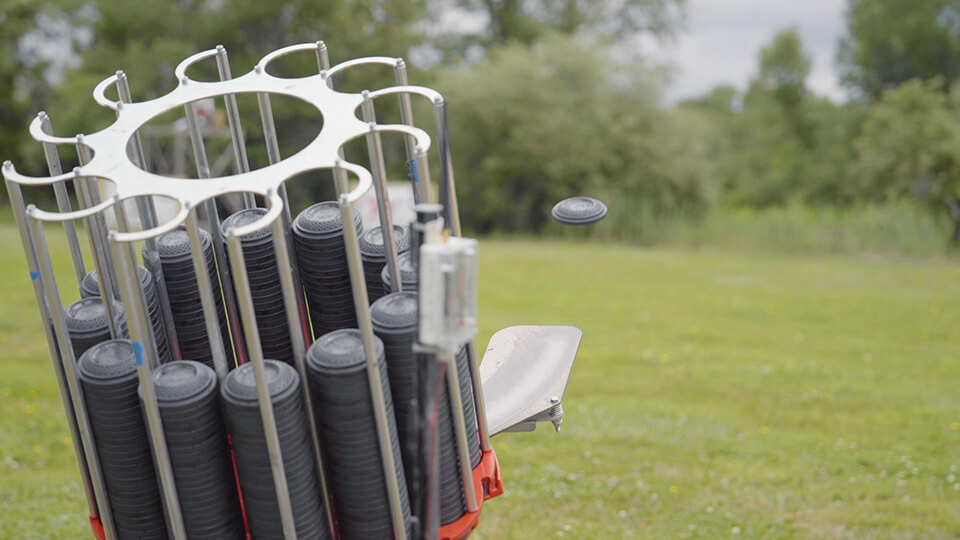
Beware of the shadows! Especially if the setter is throwing a target with the dark bottom facing a shooter. This is exactly why you should never get your demo with your gun mounted in your face. It obscures a ton of information and keeps you from being able to pick up better hold points and nuances of what’s going on out in front of you. A great pair of shooting glasses will make the difference in these cases. There are certain color spectrums that can make the clay stand out regardless of the conditions and it can often mean the difference in your scorecard.
Don’t Forget Your Fundamentals
Trap setters are always coming up with ways to make us cringe at a clay. I’ve seen trampolines tucked on the side in the flight line to make the clay bounce back chaotically in the field, clays skipped across a pond, long flight lines with very short visual windows and all sorts of oddball birds. The key to success is to remember it’s still only a clay pigeon and even though it looks like it defies physics and gravity, it doesn’t.
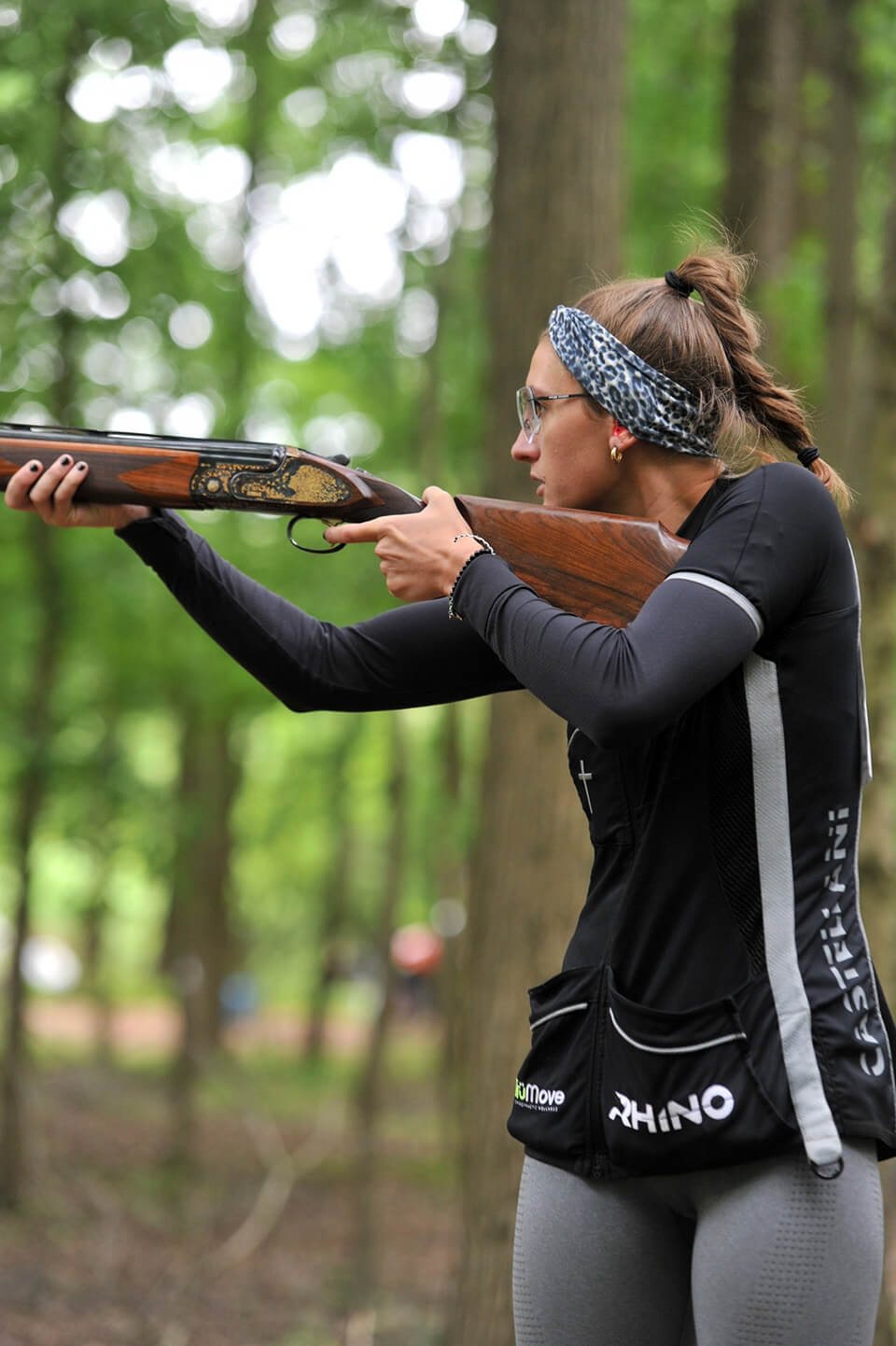
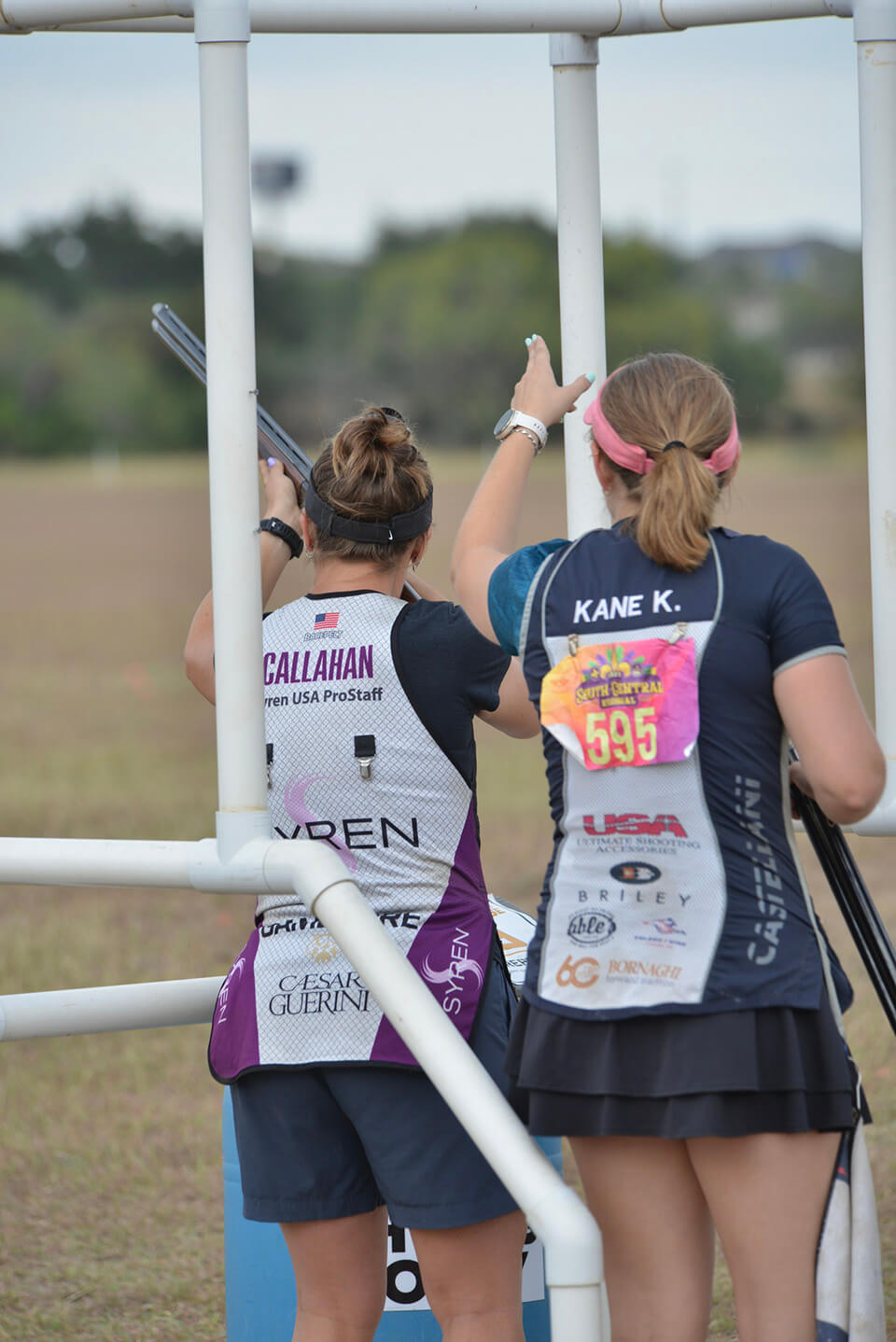
When you call for a demo, keep your gun down out of your face. Use only your finger to point at the bird so that you are able to pick up key markers in the background and set your hold point with a great reference. This allows you to keep coming back to the same spot and builds consistency in your shot. Understand the speed and angle of the clay at the break point. If you’re shooting it in the middle of the field, who cares how fast it is coming off the plate on the trap? Don’t get caught up in the distractions a trap setter has pushed in front of your face. Cut through all of the visual noise and understand what’s happening at your break point (speed, angle, impact) have a phenomenal hold point and keep your muzzle smooth and under control.
Have confidence, have a plan and have your favorite Syren out in front of you and those “oddities” on the clay course will quickly become an exciting challenge instead of a dreaded presentation.
Enjoying this post? Read more just like it on our Syren Savvy Blog HERE.
*This article was originally posted in our column on WomensOutdoorNews.com written by Kate Ahnstrom and edited by WON Publisher/Editor Barbara Baird.




 Sign up to get interesting updates and news sent to your inbox.