
As a sporting clays instructor, I’m frequently asked if I follow or know of certain titled, competitive shooters or hunting influencers. Every now and again, a name will resonate as someone I’ve heard of or follow. Most names are just another name, though, and I have to explain that I actually spend most of my time following and researching scientists, doctors and mental training experts.
Why? Well, because the human anatomy and how it works has far greater bearing on how a shooter will interact with a target. I often say this: “If you can’t see it, you can’t shoot it.” In a vision-based sport, a hunter or competitor’s ability to ascertain a target means everything. Other contributing factors to shooting success includes gun fit, stance and mount, along with an ability to correctly read a target and react accordingly.
This month we open up the biology of shooting and how your body, build and mental interactions with clays and feathers impacts your ability to connect with targets.
Keep Calm, Shoot On
A clay course can be an intimidating place for new shooters. As they walk across shooting range parking lots – often filled with expensive UTVs decked out with scabbards boasting high-end shotguns – they must wonder if they have any business trying the sport. People bustle from the clubhouse to the course decked out in shooting vests repping their chosen brands, while sporting electronic ears and expensive Pilla glasses. How can new shooters concentrate in the boxes when a couple of those UTVs roll up behind their stations, and four- or five-sharp-looking shooters jump out, chatting about chandelles and crushing tricky true pairs? The short answer is – they can’t!
Mental training for clay games is a large and often overlooked component. Only within the last few years has it become mainstream to have experts offer special sessions to work with clay shooters to gain that competitive edge and block out the extraneous noise around them and in their own heads. Believe it or not, you already know how to break any target out there, but your mind will throw 1001 reasons in your way of why you’re about to miss. Learn to relax and let the subconscious mind see the target and keep all those gremlins telling you can’t do it off your shoulder.
The Biology of Shooting a Shotgun
I have to remind students that everyone started exactly in the same spot, a newbie. I also have to remind them that clay shooting can be what they want, either for pleasure or competition, but it’s a personal journey and everyone has their own paths.
Eye See It!
Once your mind is clear and settled, learn the ins and outs of your most valuable shooting asset, your eyes. As a new shooter, your primary goal is to engage with the fundamentals. Step one, find the target. This may seem overly simplified, yet how many times have you or someone you know complained about not being able to see the target?

The rib on a shotgun serves two purposes. First, it allows for ventilation along the barrel, keeping heat distortion from obscuring a clear sight picture. Second, it gives the eye a sight plane out to the target. Think of the rib as an extension of your eye. The cheek is constructed of a zygomatic bone (aka cheekbone), buccinator muscles and mandible. The comb (top of the stock) should allow the underside of the zygomatic bone to rest comfortably on top. The center of the iris should be flat on the rib and looking straight down to the bead. In order for this to occur, the pitch and cast in the buttstock needs to fit the angle of a shooter’s shoulder and the comb needs to be the correct height.
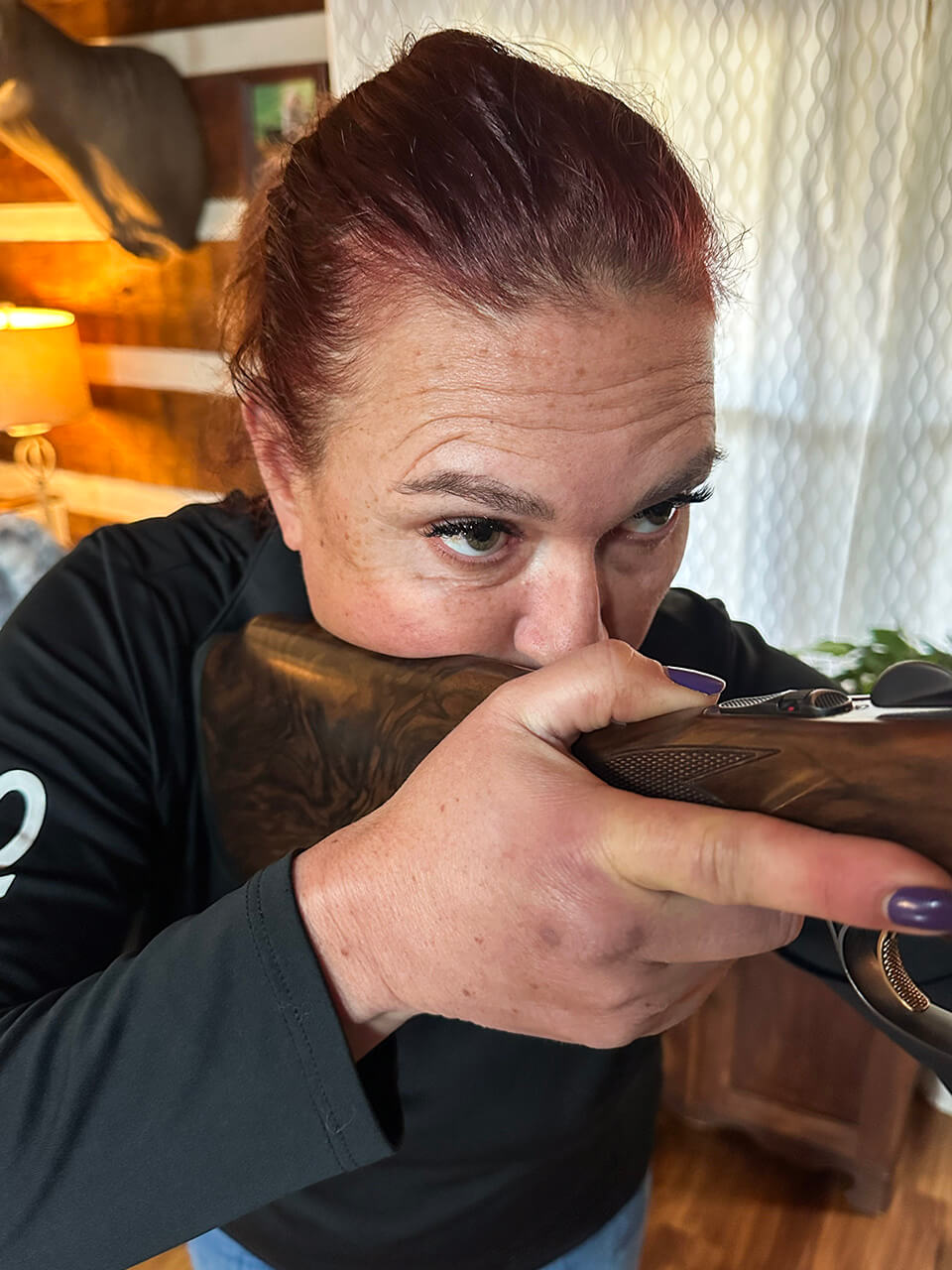
Syren crafts its shotguns with 7 degrees pitch instead of the industry standard of 5 degrees. You’ll also notice the use of a Monte Carlo style stock to accommodate women’s higher cheek bones. A comb that is too low makes a shooter mount a gun above the pocket, which leads to bruising on the clavicle and also, allows the muzzle to flip up hurting a shooter’s cheek and shoulder. If pitch is incorrect, the toe of the stock will dig into the shoulder and cause a shooter to cant the gun to the side in an effort to get the rib in the correct position under the eye. This causes more felt recoil and can also lead to bruising in the cheek.
Give Yourself a Hand
Moving down through the anatomy of a shooter, we reach the upper torso. Think of the arms as simply a rack to support the shotgun. When a shooter wants to move a gun, they do so through the waist and hips, not arms.
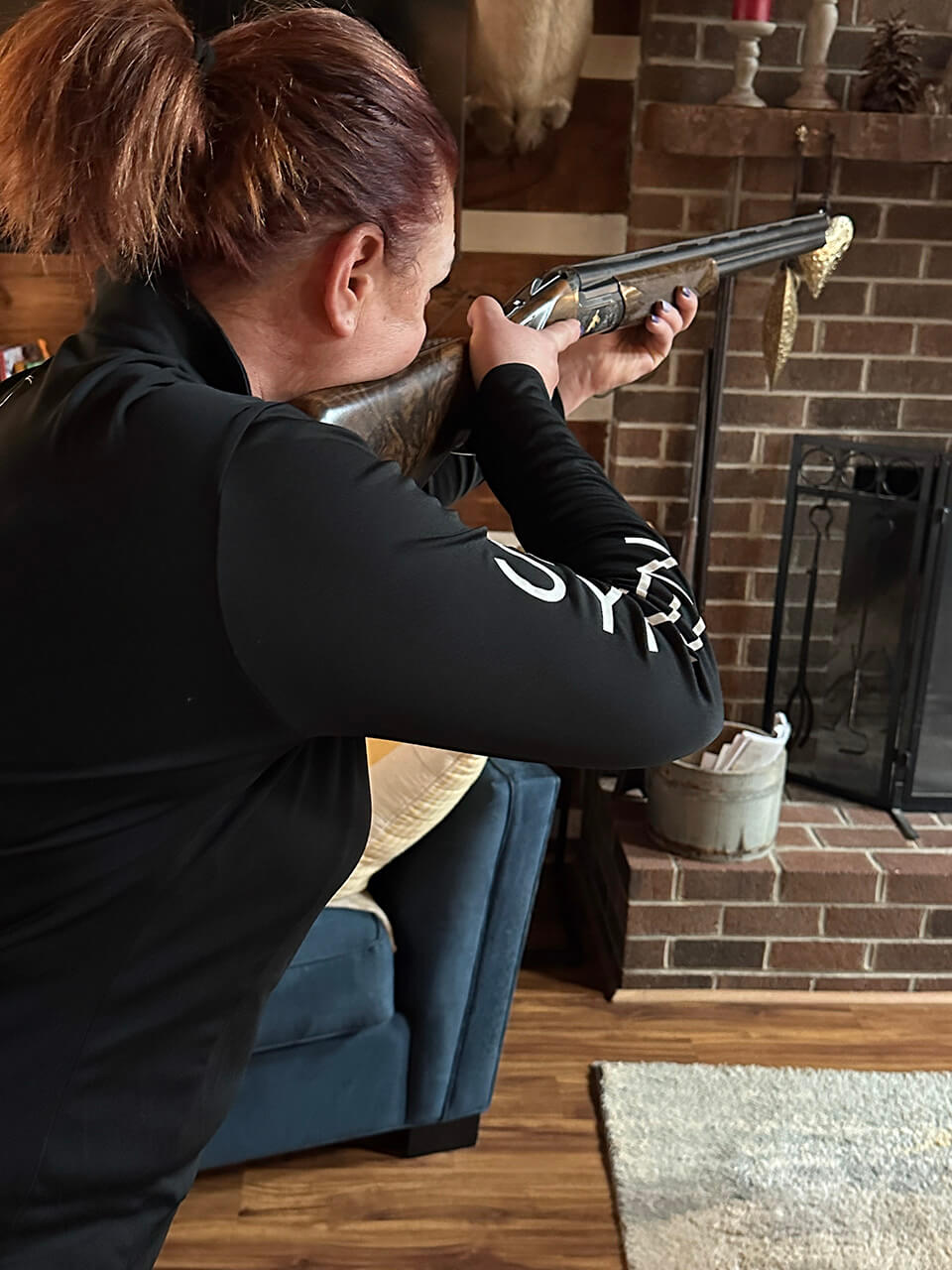
The arms should be slightly bent and relaxed, with elbows pointed down; no chicken wings ladies! While there are no doubt skeet and trap shooters grimacing at my suggestion to keep elbows down, the game of sporting clays and wing-shooting require different stances, since the targets bring a wide array of presentations and aren’t the same exact flight lines over and over and over. Also, the upright elbow lock position is difficult for women, as we don’t have an outer chest wall muscling that men enjoy, allowing them to hold weight out in front of them. Women fatigue faster and have a lower center of gravity – making it more difficult to hold weight directly out in front of our bodies. This is another reason Syren shotguns are built with an excellent balance in forward and rearward weight distribution, making it easier for women to swing and handle these shotguns out in front of them. A gun that is too forward-heavy will be difficult to swing smoothly and a gun that is too rearward-heavy will allow the muzzles to flip up.
The Core Values
The powerhouse of propulsion is the core. We take it for granted, curse it and do our best to squeeze it into our favorite jeans (at least, that’s my usual interaction). It’s also the main motor for moving your gun across the field. Keeping toes pointed in the direction of the break, not the hold point, you can cleanly rotate through the break point. If toes are not set in accordance with the break point, or feet are set too far apart, hips will lock up – causing your shoulders to drop and the gun muzzles to fall below the birds. External rotation of the hips provides stability, while inward rotation aids in the amount of force applied.
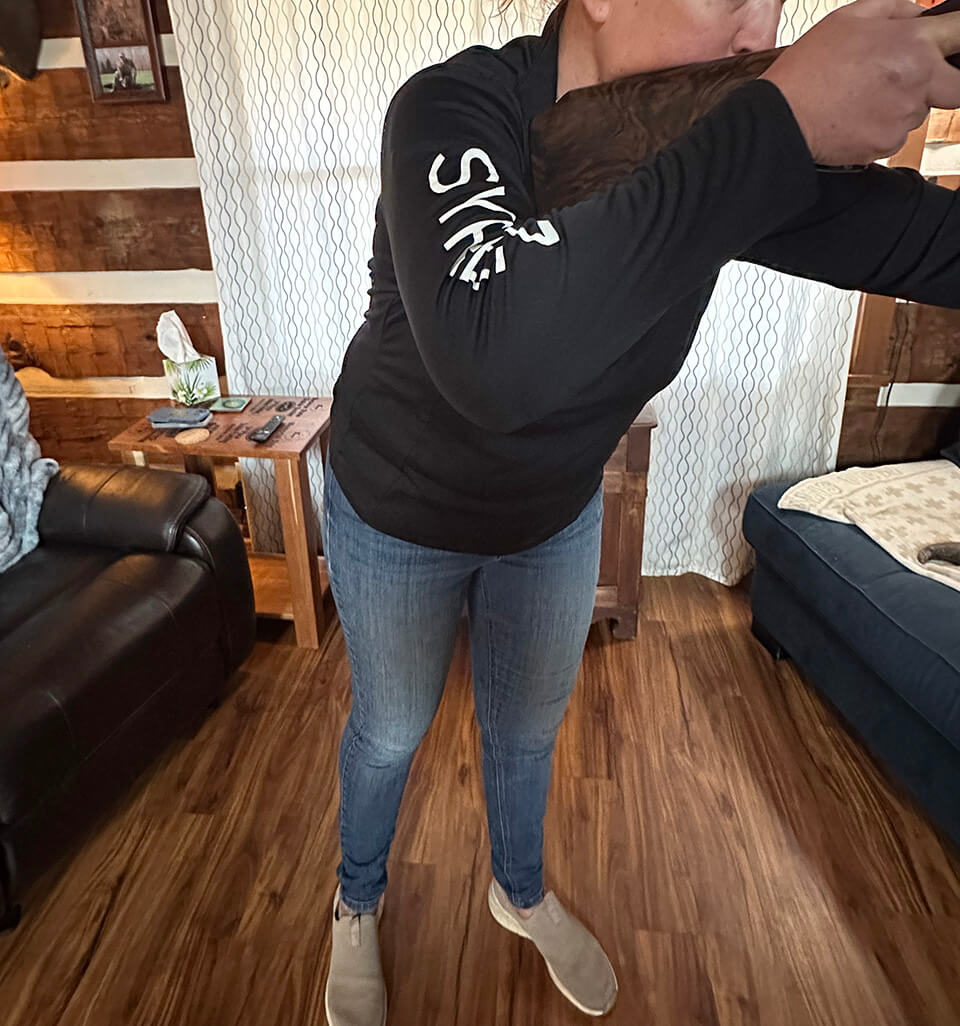
If your stance is too spread out, it shortens your abdominal muscles and prevents full rotation of the upper torso through the swing. A wide stance will prevent a shooter from reaching those high, overhead shots and low-and-below shots.
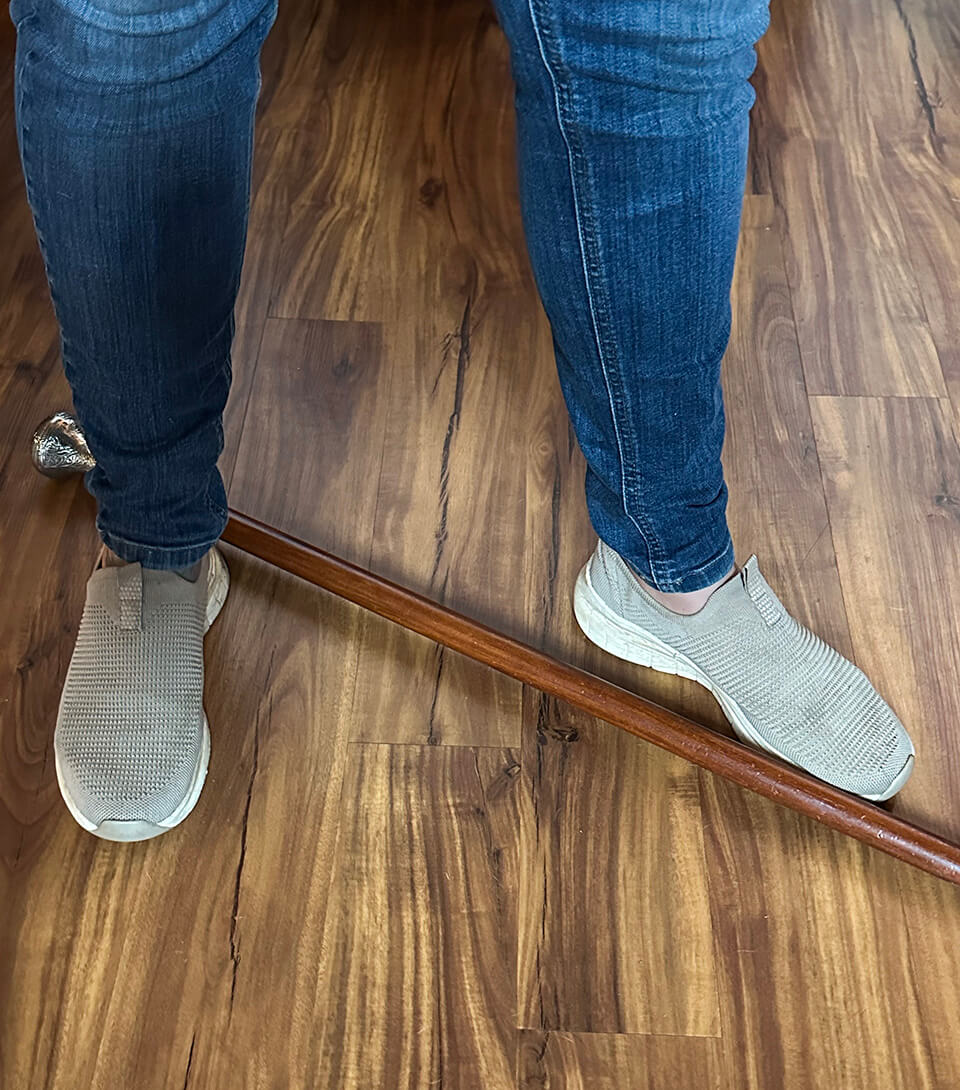
Skeet shooters can get away with that wider base stance because their birds do the same exact things over and over. Trap shooters can also take a both-feet-aligned-together stance since their birds also are fairly stagnant in terms of presentations. Sporting clays and wing-shooting is too varied to have anything other than a shoulder-width base. Shooters should adopt slightly forward upper torsos, allowing the ability to wrap the butts of their guns securely into their pockets, maintain correct and solid cheek welds and have full rotations.
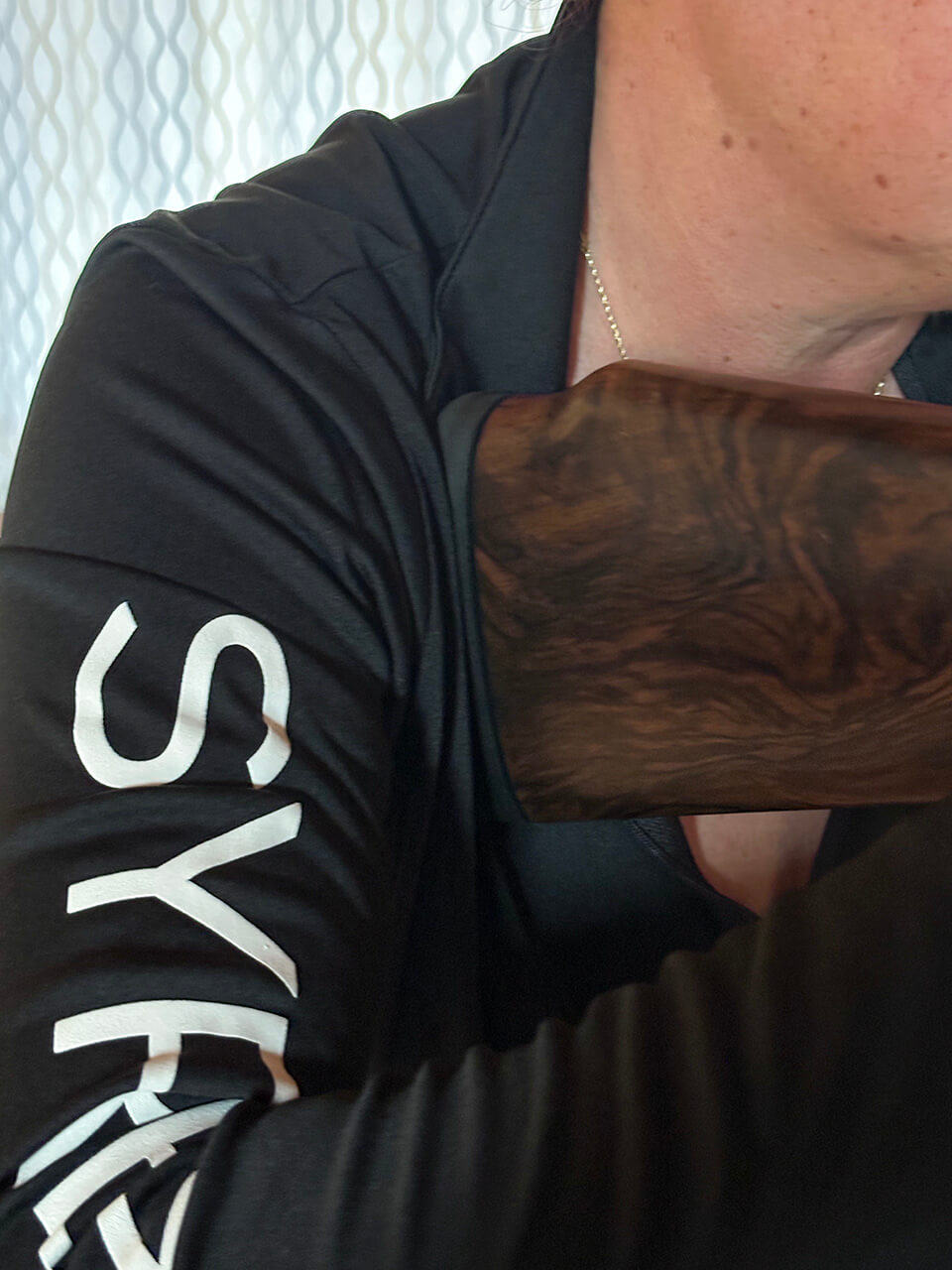
Having a solid understanding of why gun fit is so important and how a shooter can manipulate body position to maximize advantages gives a shooter proper form, competitive edge and consistency in connecting with the target. Instead of trying another gadget to add Xs to the scorecard, tap into your natural talents.
It’s important to note that Syren doesn’t just offer one shotgun designed for women. Syren has are over 70+ options available. So if you’re looking for something designed to suit your specific needs, check out our full line of shotguns for women.
Enjoying this post? Read more just like it on our Syren Savvy Blog HERE.
*This article was originally posted in our column on WomensOutdoorNews.com written by Kate Ahnstrom and edited by WON Publisher/Editor Barbara Baird.






 Sign up to get interesting updates and news sent to your inbox.